Make the furniture plan before the feature wall
The bed, wardrobe and door swings establish the room. Check access on the sides of the bed, the route to the bathroom and space to open drawers. If a desk is required, include the chair when it is pulled out. This prevents an attractive wall design from being drawn around furniture that cannot be used comfortably.
Choose one main colour relationship
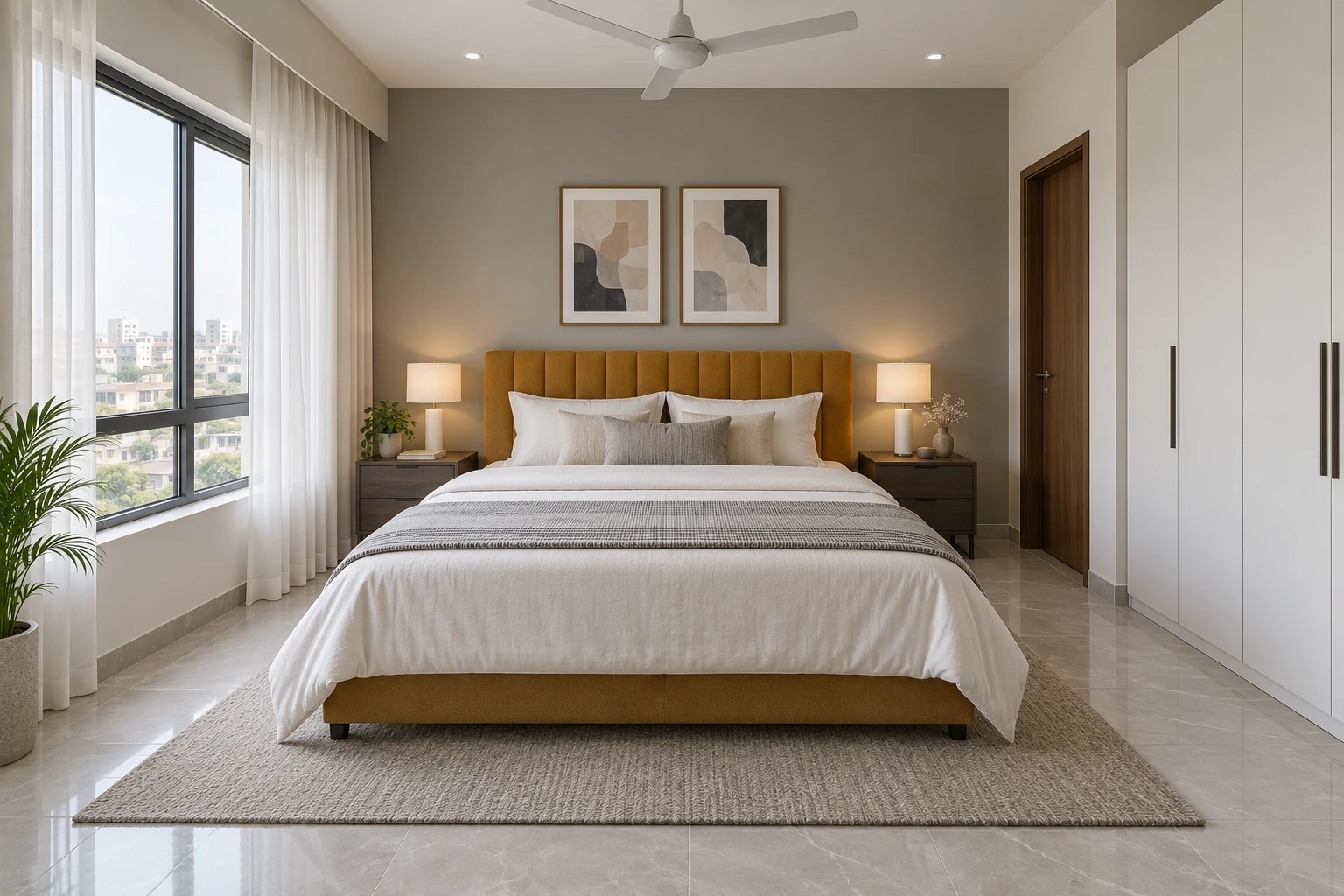
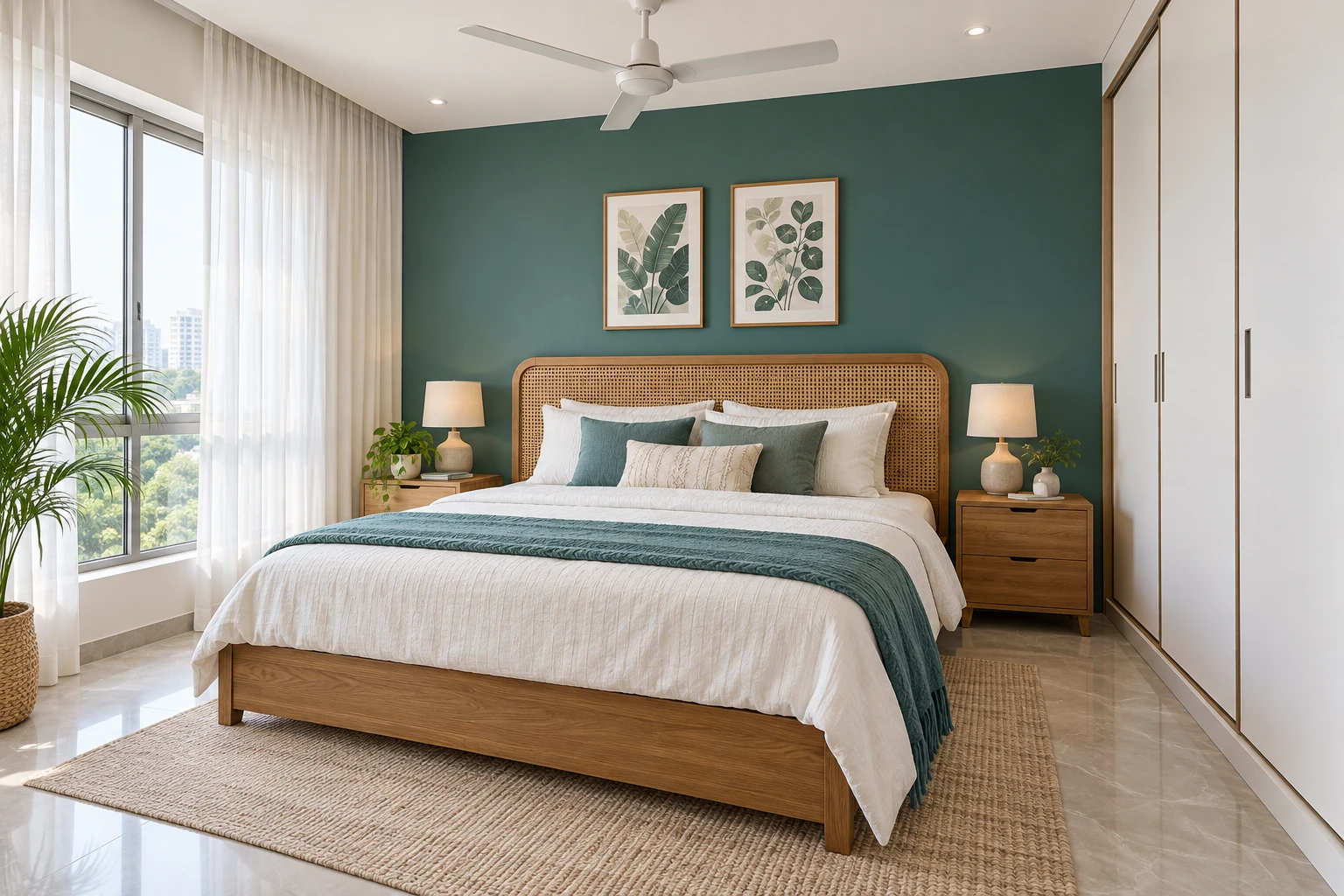
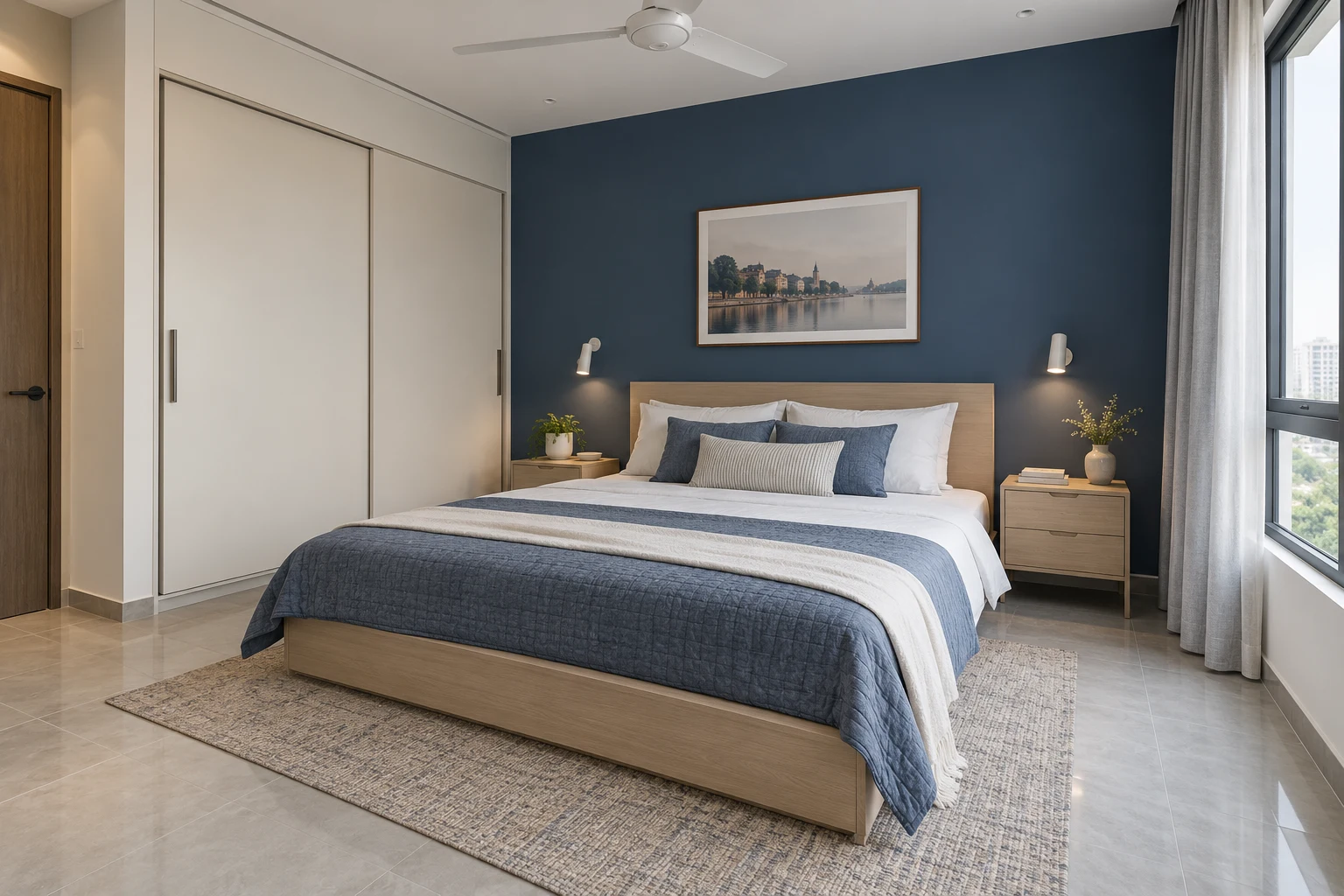
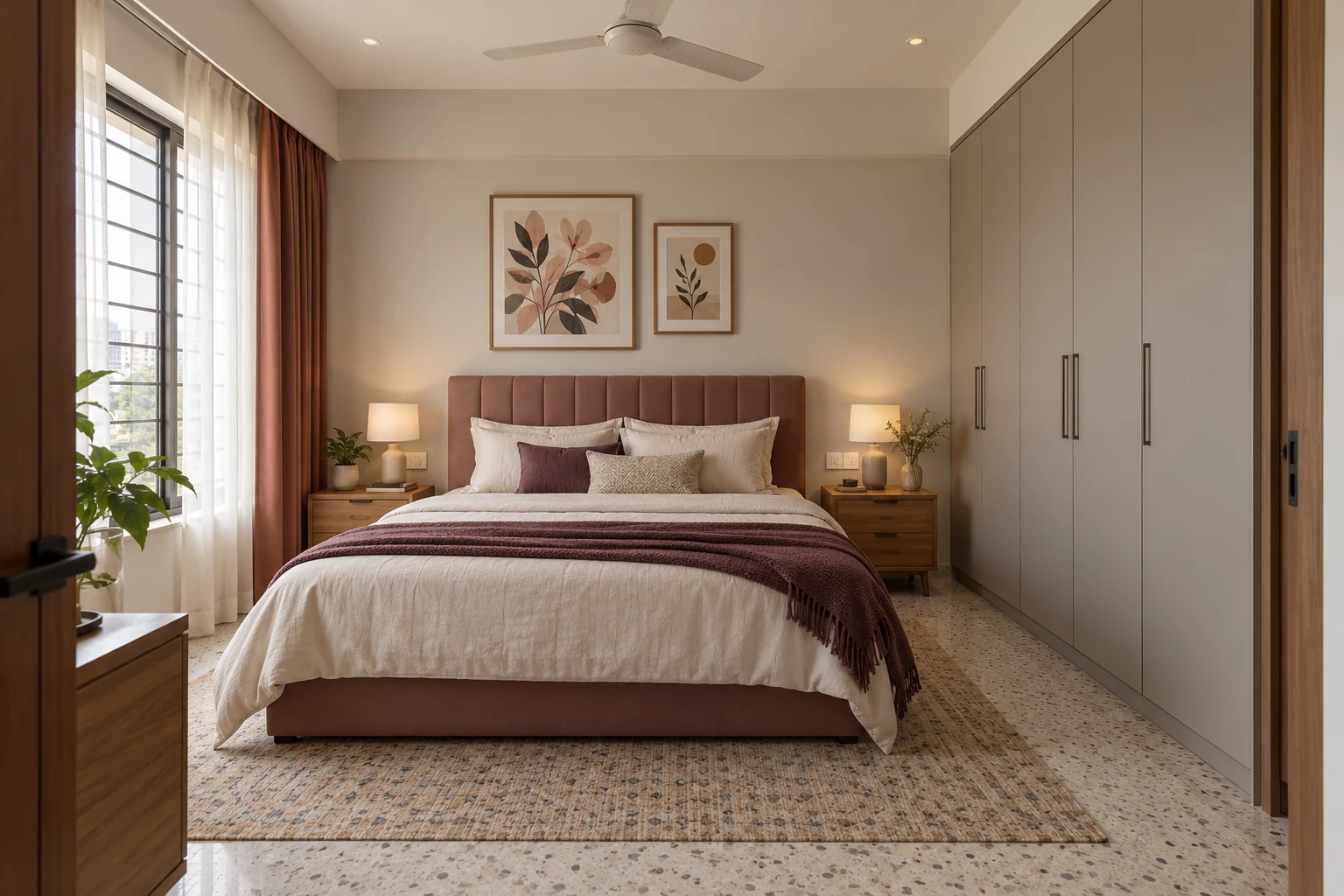
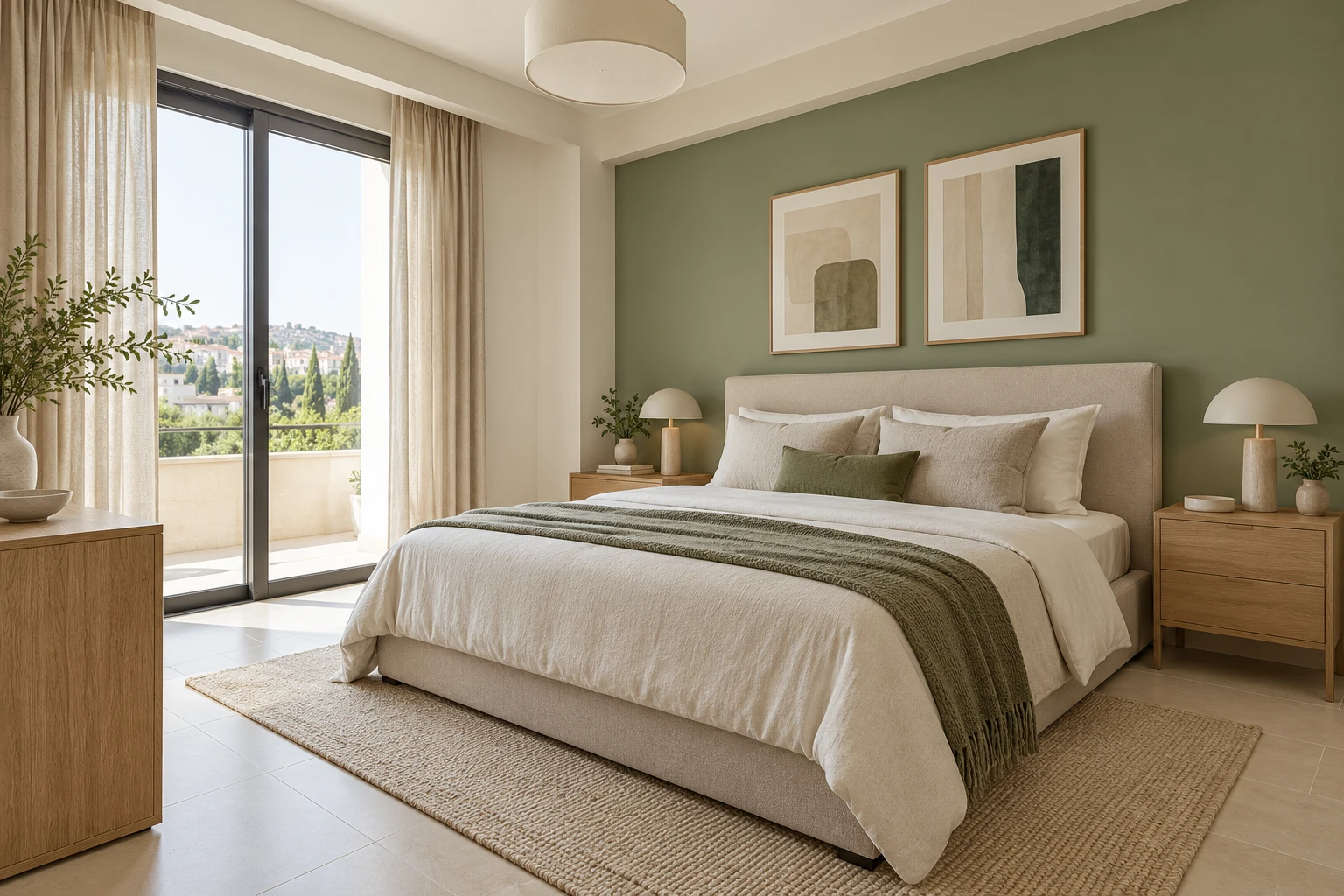
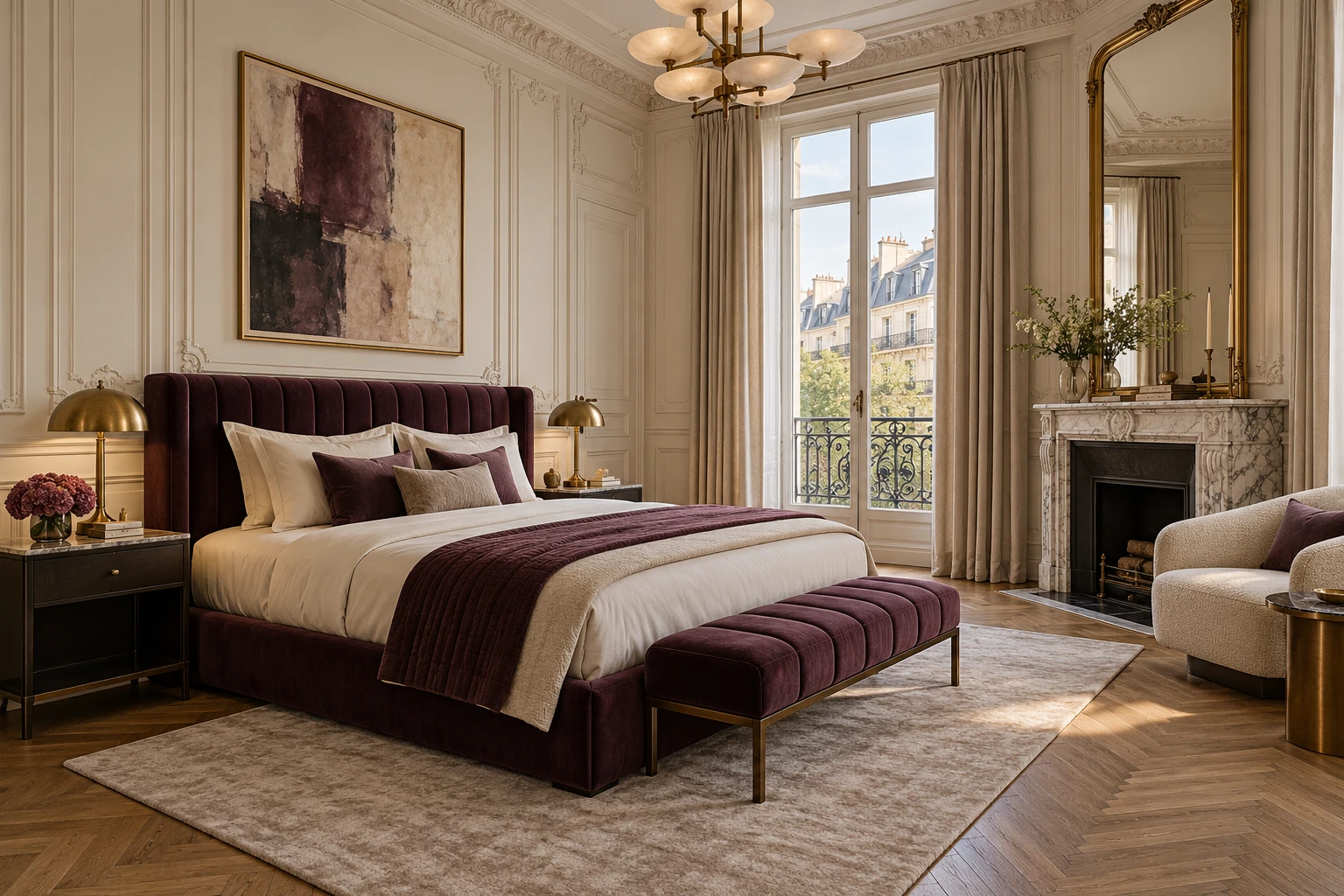
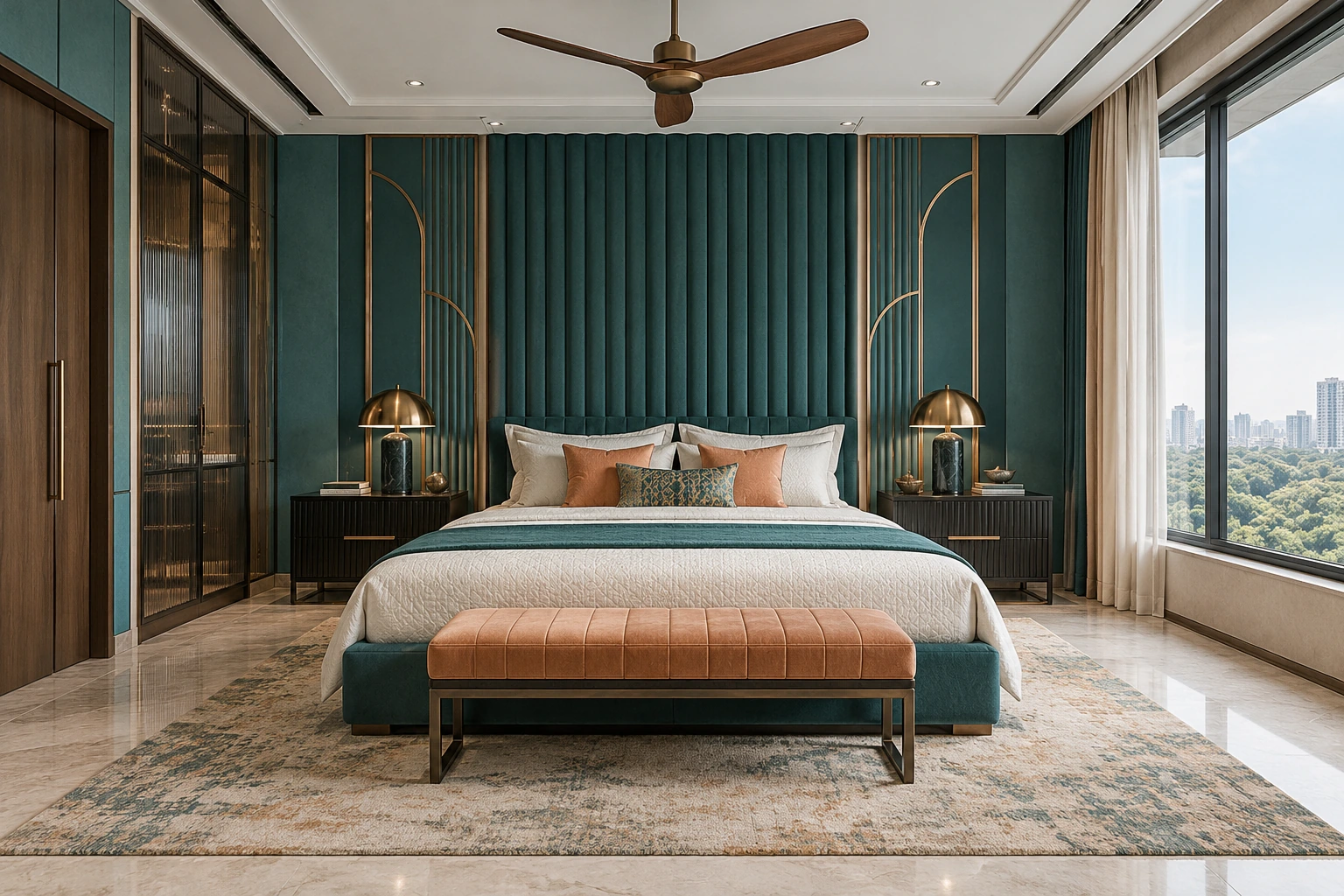
The teal and apricot bedroom uses a deep bed wall with lighter textiles. The lilac and charcoal room is cooler and more restrained. Indigo and orange work through patterned fabric and timber. Choose the relationship you like, then repeat it selectively. Every wall and every cushion does not need a different accent.
Use texture to make neutrals interesting
A beige bedroom can still have depth when linen-like fabrics, upholstered surfaces and wood grain are balanced. Look at the neutral bedroom in the collection: the wall moulding gives structure while the bedding remains relaxed. Test samples together, including the flooring, rather than choosing each from a separate photograph.
Coordinate the practical details
Set bedside sockets, switches and reading lights around the actual furniture dimensions. Check curtains against wardrobe doors and leave access for cleaning. A decorative ceiling should not determine fan placement without considering the bed and the manufacturer’s mounting requirements. For a child’s room, include furniture anchoring and safe window treatments in the specification.
Bring a short, clear brief
Save one image for the colour, one for the bed wall and one for storage. Tell VASTUTEK which element you like in each. That gives a more useful starting point than combining every decorative feature into one bedroom. The final materials and proportions should respond to your room’s daylight, dimensions and everyday use.
Gallery images illustrate design directions. Final products, dimensions, performance and execution costs need to be confirmed for your project.
Plan your space with VASTUTEK ↗